

Field testing · Test type
Installed Anchor & Field Condition Testing
Customer questionDoes the installation in the field actually match the design intent?
The short answer
What this test tells you
An engineered rack design is only valid if the installation actually matches it — the right anchors, at the right depth, in the right places, with all the braces installed. Installed anchor and field condition testing checks the installed system against the design drawings and documents what it finds, with photographs and measured results. You get a report that supports special inspection requirements and building department conditions, and gives you a defensible record that what was built is what was engineered. Where something does not match, it is documented and routed to the engineer — found on paper now instead of discovered as a problem later.
Why it matters
What decision does the result support?
An engineering design is only as valid as the installation that implements it. Substituted anchors, shallow embedment, missing braces, or relocated base plates quietly invalidate the assumptions behind the calculations without changing how the rack looks. Measured results from the installed condition give engineers, officials, and owners a defensible record that the installed system is the system that was designed.
What the evidence supports
- special inspection documentation
- field installation verification
- plan check response
- engineering review
- code/standard compliance support
Typical project situations
- Measured test evidence supporting special inspection documentation for permitted rack installations
- Post-installation verification when installation was not continuously observed
- Closing out building department or plan check conditions
- Verifying installed anchor type, embedment, and placement against drawings
- Due-diligence review of an existing installation before purchase or modification
- Verifying corrections after a failed inspection
What you receive
Test reports
The primary deliverable is the test report: what was tested, to which reference, with what instrumentation, what was measured, and what the result means for the assumption in question. What a test report contains is described on the Test reports page.
Important distinctions
What does this test not prove?
This service tests and measures the installed condition; the measured results document whether the installation matches design intent. Matching the drawings does not by itself establish the capacity of components or the slab — where capacity is the question, the test program adds proof-load, shear, or slab testing. It is also distinct from a design review: it checks the field against the drawings, not the drawings against the code. And it is testing, not special inspection: SMHE Lab reports measured results from the installed condition. It does not act as the project’s Special Inspector, approve the installation, or accept it for the jurisdiction — those roles remain with the project’s design professional, inspector, and building official.
The question is not simply whether something held load. The question is whether the assumptions behind the design remain valid — and every test answers only the question it was designed to ask.
Whether this method is inside SMHE Lab’s accredited scope is stated in the Scope of Accreditation. Ask us to confirm before relying on an accredited result.
The assumption
What assumption does this test check?
The as-installed rack and anchorage conditions match the assumptions in the engineered design documents.
What it evaluates
What does this test evaluate?
Every engineered rack design assumes the field installation matches the drawings: anchor type and embedment, base plate placement, member sizes, bracing, and configuration. Installed anchor and field condition testing measures the as-installed condition and compares it against the design intent. Depending on the project, it can combine load testing of installed anchors, torque checks, physical measurement, and visual verification into measured results that support special inspection documentation.
Technical detail
How does the test work?
Installed anchor and field condition testing measures and documents the as-installed condition of a rack system and compares it, item by item, against the engineered design documents. The scope is defined from the drawings: anchor type, diameter, and embedment; base-plate size and placement; member sizes and configuration; bracing presence and arrangement; and any project-specific conditions the permit or special inspection program requires. Field methods are matched to each item — visual identification against the anchor schedule, physical measurement of placement and spacing, torque checks where tightening documentation is required, and targeted proof-load or shear testing where the program calls for performance evidence rather than conformance evidence. Deviations are recorded as findings, not silently judged: substituted anchor types, embedment that cannot be confirmed, relocated base plates, and missing braces are documented with location, photographs, and the design requirement they diverge from. The deliverable is a test report structured for special inspection files: scope and referenced design documents, checklist categories, per-item measured results, photographic documentation, and a summary an engineer of record or building official can act on. The report documents conformance — that the installed system is the system that was designed — which is the premise every capacity calculation in the design package depends on. Where findings affect capacity, the report routes them to engineering resolution rather than resolving them by inspection.
Related assumptions
The assumptions on the line
Installation matches design intent
Anchors and connections were installed as the drawings and product instructions require.
Embedment, torque, spacing, and position drift in the field; the drawings stay correct while the installation quietly diverges from them.
Related standards
Related standards
ANSI MH16.1
Evidence visuals
What the setup and the numbers look like
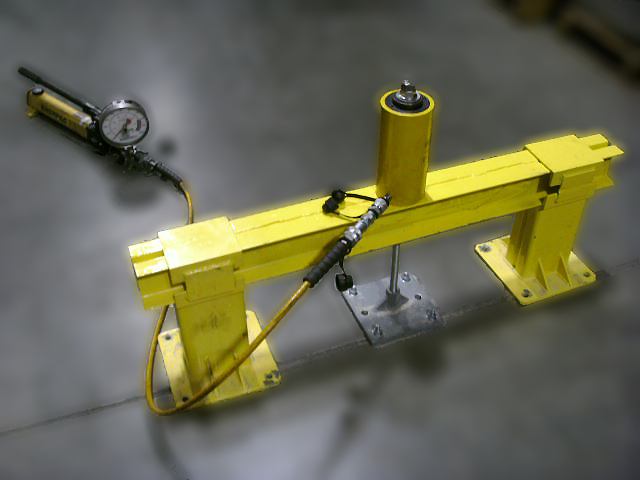
Questions engineers ask
Frequently asked questions
What does installed anchor & field condition testing cover?
It tests and measures the as-installed condition — anchor type and placement, base plates, member configuration, bracing — and compares it against the engineered design documents. Depending on the project, it can combine load testing of installed anchors, torque checks, physical measurement, and visual verification into a documented record of measured results.
How does this support special inspection requirements?
Permitted rack installations often carry special inspection conditions that require documented evidence of the installed anchorage and configuration. The testing produces that record — measured results in a form engineers and building officials can reference — helping close out plan check conditions and inspection requirements. SMHE Lab provides the measured evidence; the project’s inspector and the building official make the verification and acceptance decisions.
Does this testing prove the rack has adequate capacity?
No — matching the drawings and having capacity are different questions. The conformance checks establish that the installation matches the design intent; the capacity case lives in the engineering design itself. Where capacity is in question — anchors, slab, or components — the test program adds proof-load, shear, or slab testing to provide measured performance evidence.
When should installed-condition testing happen — during installation or after?
Both are used, but earlier is cheaper: testing during installation catches embedment and placement issues while they can still be corrected without rework. Testing after installation is common when the requirement arrives late — a permit condition or an unobserved installation — and remains fully workable; some items simply take more effort to confirm after the fact.
What happens when the installed condition doesn’t match the drawings?
The deviation is documented as a finding — location, photograph, and the design requirement it diverges from — and routed to the engineer of record for resolution. A deviation is not automatically a failure: some are acceptable by analysis, others require correction, and the report’s job is to make sure each one is decided by an engineer instead of discovered later.
Is this testing the same as a rack safety or damage inspection?
No. A damage inspection looks for impact damage, deformation, and wear in an operating facility; this testing compares a new or modified installation against its engineered design documents. They answer different questions — one asks whether the rack is still in acceptable condition, the other asks whether what was built is what was designed.
Is this the assumption you need checked?
Tell us about the installation or site condition, what changed, and what you need to know — we’ll confirm whether this test answers your question, or point you to the one that does.