

ANSI MH16.1
Beam-to-Column Cyclic Testing
What stiffness and strength values can our engineers rely on for our beam-to-column connections in seismic design?
Testing · Laboratory
Connections, members, assemblies, and materials — tested under controlled loading to the reference the standard defines, so the numbers your model uses are measured, not inherited.
Lab testing · orientation
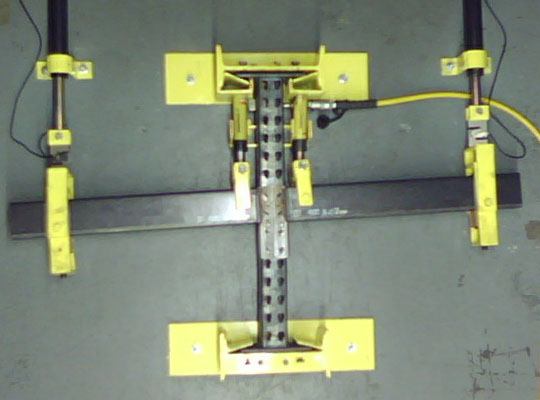
Engineers don’t throw dice and hope for the best.
Conceptual illustration. Engineering inputs shown are illustrative, not test data.
Why lab testing
Calculations rest on assumed stiffness, capacity, restraint, and material behavior. Laboratory testing measures those quantities on the finished product — including the effects of perforations, cold work, fabrication, and connection detail that analysis approximates. Raw test data is only the beginning: the value increases when results are converted into defensible engineering inputs.
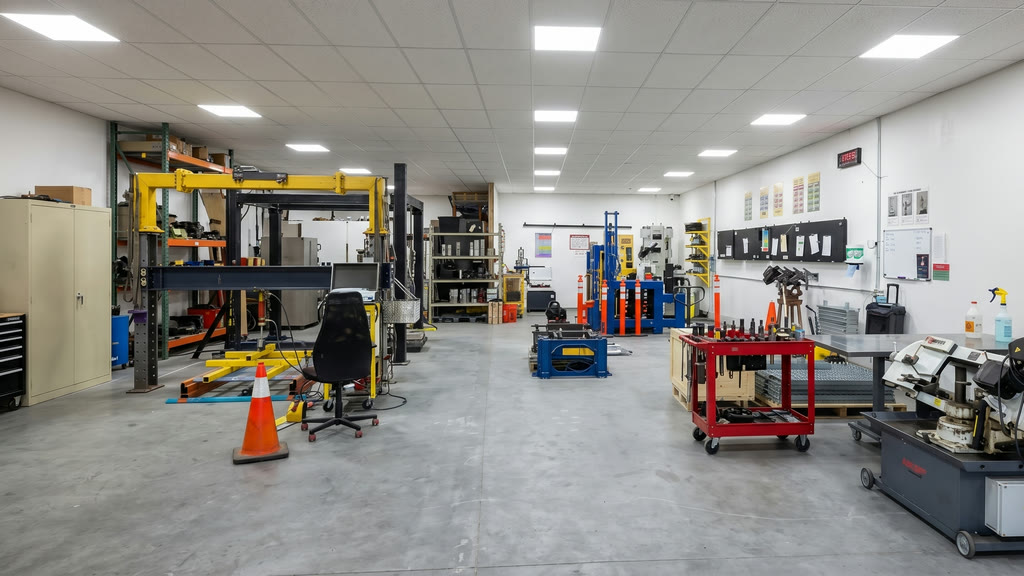
Connection behavior
Stiffness, strength, and cyclic response of the joints that govern how rack systems actually behave.
ANSI MH16.1
What stiffness and strength values can our engineers rely on for our beam-to-column connections in seismic design?
ANSI MH16.1
How much moment can our beam-to-column connection carry, and how stiff is it under load?
ANSI MH16.3
Can the arm connection on our cantilever rack carry the load our catalog says it can?
ANSI MH16.3
Will the connection between our columns and base beams perform the way our design assumes?
ANSI MH16.3
Will our column-to-base connection still perform after repeated loading, not just under a single load?
ANSI MH16.1
How much rotational restraint does our rack column actually get at its base?
Members & assemblies
What columns, beams, arms, shelves, and partial assemblies actually carry — measured, not assumed.
ANSI MH16.1
What is the actual compressive capacity of my rack column section?
ANSI MH16.1
Will my pallet beams carry their rated load without excessive deflection?
ANSI MH16.3
Can my cantilever arms carry their rated load without excessive deflection or connection distress?
ANSI MH16.1
How does my beam actually perform when it is connected the way it will be in service?
ANSI MH28.1
Will my shelves carry their rated load the way they are actually supported?
ANSI MH28.1
Can the connections between my shelves and posts actually carry the load the shelves transfer to them?
Bracing, stability & panels
The lateral system: bracing connections, base plates, portal stability, decking, and shear panels.
ANSI MH16.1
Can the bracing connections in our upright frames carry the forces our design assumes?
ANSI MH16.1
Will our frame bracing connections keep their strength after repeated seismic-type loading?
ANSI MH16.1
Will the column base plate connection hold up under repeated seismic loading?
ANSI MH16.1
Is the rack stable in the down-aisle direction under the lateral forces it has to resist?
ANSI MH26.2
Will these wire decks actually carry their rated load on our beams, with acceptable deflection?
AISI S907
How stiff and strong is our wall panel — measured as a built diaphragm, not assumed?
Materials, impact & certification evidence
Finished-part material properties, impact energy response, repair validation, and the evidence base for certification.
ASTM A370
Does the steel in our finished parts actually have the properties we designed around?
Lab testing
Can our product absorb the impact it is claimed to handle?
ANSI MH16.1
After a repair, can the rack still carry what the design says it can?
ANSI MH16.1
Can our product claims be supported by traceable test evidence?
The program around the test
A test result depends on what happens before the load is applied, and its usefulness depends on what is done with the measurements afterward. SMHE Lab undertakes the work on both sides of the test, as set out in the plan for each program.
The test itself is only one part of the service.
The production component, stock, or material you already have.
We read the governing method against your part and define a practical specimen. Where appropriate, preparation and test-specific fabrication are done in-house.
Controlled loading to the reference the method defines.
Measurements are reduced to the values used for engineering evaluation, with supporting test data maintained for traceability.
A report that traces each value to the specimen and setup that produced it.
Before the test · In-house preparation
Some tests require more than instrumentation. SMHE maintains practical specimen-preparation and fabrication capabilities to turn production material into test-ready specimens where appropriate, reducing unnecessary handoffs between the customer’s production floor and the laboratory.
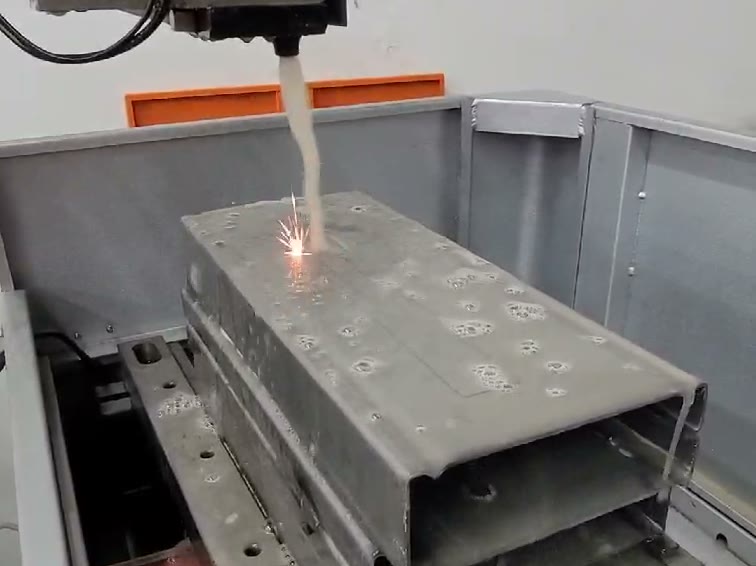
Wire EDM
Reduced-section tensile specimens are cut from supplied production material, where precision is required.
Photograph · Wire EDM cutting coupons from production sections · SMHE Lab
Cutting and end preparation
Column sections are cut to length and their ends prepared for even bearing.
Plates and test-specific components
Plates, fixtures, and other components are made for the test, so the product can arrive as produced.
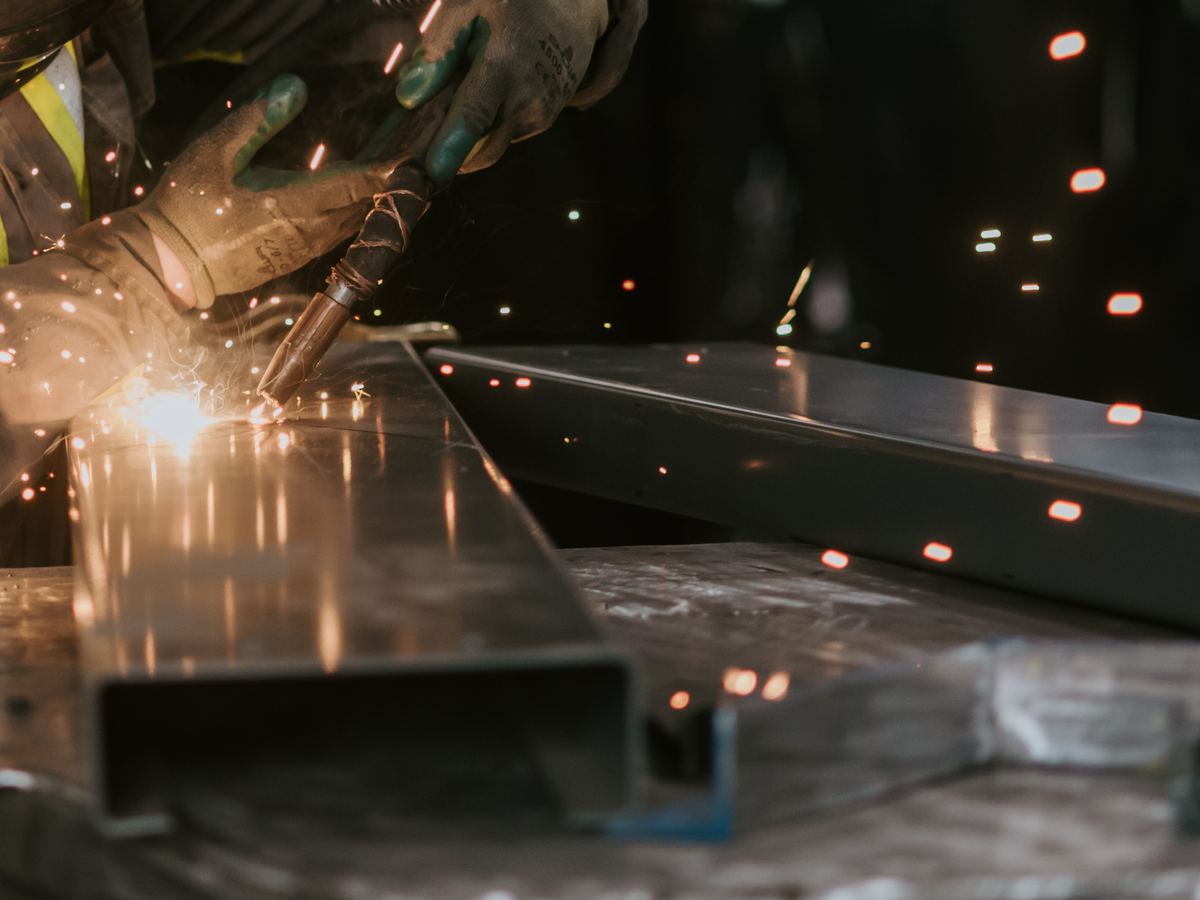
Welding
Test-specific parts are welded to the specimen here, where appropriate.
Photograph · Welding in the shop · SMHE Lab
Maintained to support testing · not offered as a separate fabrication service · used where appropriate, as agreed in the plan for each program
What a connected program removes
Lower cost is the result, not the offer.
Preparation changes only what the method requires. The product under evaluation stays as produced, and the method used is documented in the report.
After the test · Results and evidence
Measurements are reduced to the values used for engineering evaluation, with supporting test data maintained for traceability. The plan defines the results, records, and supporting data provided for the project.
What you receive
Results are documented under the laboratory’s written quality system, which controls how testing is performed, documented, and reviewed. Formal accreditation covers the published scope. Reports are prepared for use by a qualified engineer for the intended application, and structured so a reviewer or building official can trace each reported value to the specimen and setup that produced it.
The goal is that a test run today and a test run next year, by a different operator, follow the same procedure and mean the same thing. Written procedures and controlled setups reduce operator-to-operator and lab-to-lab variability and make rigorous testing available to more manufacturers.
What a test report containsCyclic connection test report · contents
What a report contains depends on the test. This is the cyclic beam-to-column connection test.
Common questions
It measures the compressive capacity of a short column section — capturing the combined effect of perforations, thin walls, and cold work that hand calculations approximate with an efficiency factor. The industry assumed 0.90–0.95 for years. SMHE’s testing produced lower values, and independent research reported Q ≈ 0.64 for a 3×3×14Ga section, roughly a third lower, with direct seismic consequences.
Rack connections are neither rigid nor pinned, and the assumed extreme changes drift, load path, and failure-mode predictions. Cyclic testing produces the measured stiffness (Kconn) and backbone curve that put the frame model on evidence instead of assumption.
Not exactly. They apply controlled loading to the reference the governing standard defines, so the result is comparable, repeatable, and defensible. The aim is to measure whether the assumptions behind the design remain valid in the finished product.
Yes. Testing is performed to applicable standards, customer-defined procedures, and project-specific protocols, under the laboratory’s written quality system. Ask us to confirm whether a given test falls within the accredited scope of certificate TL-732. View the published scope.
Kconn, Q, base fixity, deck capacity, material ductility — if it was inherited rather than measured, testing can put it on evidence.
To scope a program, include